
Luxury Home Pricing in Columbus: What Sellers Get Wrong (And What It Costs)
Luxury homes priced right in Columbus are selling in 14 to 28 days. Luxury homes priced too high are sitting for 60, 90, sometimes 120 days — and eventually selling for less than they would have fetched on day one. The difference between those two outcomes almost always comes down to a single decision made before the sign goes in the yard.
There's a conversation I have with sellers more than any other right now. It goes something like this: a homeowner in Upper Arlington or German Village or Bexley has watched the market closely for the past few years. They know what their neighbor sold for in 2022. They've looked at Zillow. They have a number in mind, and that number feels reasonable to them — even conservative — based on everything they've seen.
Then we sit down, pull the current comps, and I have to show them what the market is actually paying in 2026. Sometimes those two numbers match. More often, there's a gap. And how a seller responds to that gap determines almost everything about what happens next.
The sellers who trust the data and price accordingly tend to close quickly, cleanly, and at strong numbers. The sellers who decide to "test the market" at the higher figure tend to learn an expensive lesson about how buyers in the $600K+ range think — and how fast the market's perception of a property can shift once it starts sitting.
The Market Has Changed. The Benchmarks Haven't.

Columbus is a genuinely strong market. Median sales prices across Central Ohio rose 4.3% year-over-year through May 2026, and the luxury segment, homes in the $600K to $1.5M range, saw price-per-square-foot grow 3.2% over the same period. The city was named one of NAR's top 10 housing hot spots for 2026, and demand from relocating executives and local move-up buyers remains real.
None of that is in dispute.
What has changed is this: buyers have more options than they did in 2021 and 2022. Inventory in Columbus rose nearly 20% year-over-year in late 2025. Homes are spending an average of 40 to 46 days on the market across the broader Columbus area, compared to 22 days during the peak years. And buyers at the luxury tier — the ones looking at your home — are doing serious research before they ever schedule a showing.
They know what sold on your street. They know what's been sitting. They notice when a price gets reduced. And when a well-informed buyer walks into a home that's been on the market for 60 days, the first question they ask their agent isn't "what do I love about this place?" It's "what's wrong with it?"
That shift in buyer psychology is the part most sellers don't see coming.
What Happens When a Luxury Home Sits
The numbers on this are not ambiguous. Zillow's research on overpricing found that homes which linger on the market sell for significantly less than their list price — 5% less after just two months. At a $900,000 list price, that's $45,000 left on the table. Not from negotiating too hard. From starting too high.
In Columbus specifically, HousingWire data from late 2025 found that 51.6% of Columbus listings had experienced a price reduction — the highest rate among Ohio's major metros and well above the 30 to 35% range that signals a healthy, balanced market. More than half of Columbus listings were correcting after the fact.
Here's what that correction process actually looks like from the seller's side:
Weeks One and Two: Fewer Showings Than Expected
The listing goes live at the aspirational price. Showings come in — but fewer than expected. Feedback from buyer's agents is polite. The word "overpriced" doesn't appear in any written communication, but it's in every conversation happening behind the scenes.
Weeks Three and Four: Momentum Is Gone
Activity drops. The new-listing momentum that drives the first wave of interest has passed. The home is now competing against fresher inventory from sellers who listed after you. Buyers who toured it early have moved on.
Days 30 to 45: The Listing Develops a History
The listing has officially developed a history. Buyers searching the MLS can see how long it's been active. Some start to wonder what's wrong with it — even when nothing is.
The Price Reduction: A Different Buyer Shows Up
You drop the price to where it probably should have started. But now you're getting a different buyer. Not the one who would have jumped at a well-priced new listing in week one — the one who's been watching, waiting for a motivated seller, and planning to negotiate further.
The end result: you sell for less than you would have if you'd priced it correctly on day one. You also spent weeks in a holding pattern — keeping the home show-ready, navigating the uncertainty, watching a situation you could have avoided.
In Columbus's $600K-plus market, the buyers you want to attract are the least forgiving of an overpriced listing. They have options, they have data, and they have patience.
Why Luxury Buyers Are Different

Buyers in the luxury tier aren't shopping emotionally the way some mid-market buyers do. They're not going to fall in love with a house and talk themselves into overpaying. They arrive having already researched the seller's original purchase price, the comparable sales in your neighborhood, and what's currently active at your price point. Many of them have their CPA or attorney involved before they write an offer.
What this means practically: well-staged, well-priced luxury homes in Columbus are moving in 14 to 28 days. Correctly priced homes attract serious buyers fast. When a luxury home sits past 30 days, buyers at this level have already flagged it. They're not calling their agent to schedule a showing — they're asking why it hasn't sold.
There's also something worth understanding about the psychology of a price reduction at this level. A reduction on a $400,000 home reads differently than a reduction on a $900,000 home. At the luxury tier, buyers interpret a price cut as a signal: either the seller misjudged the market, or there's something about the property that isn't visible in the photos. Either reading gives the buyer leverage — and buyers at this level know exactly how to use it.
What Actually Drives Luxury Home Pricing in Columbus
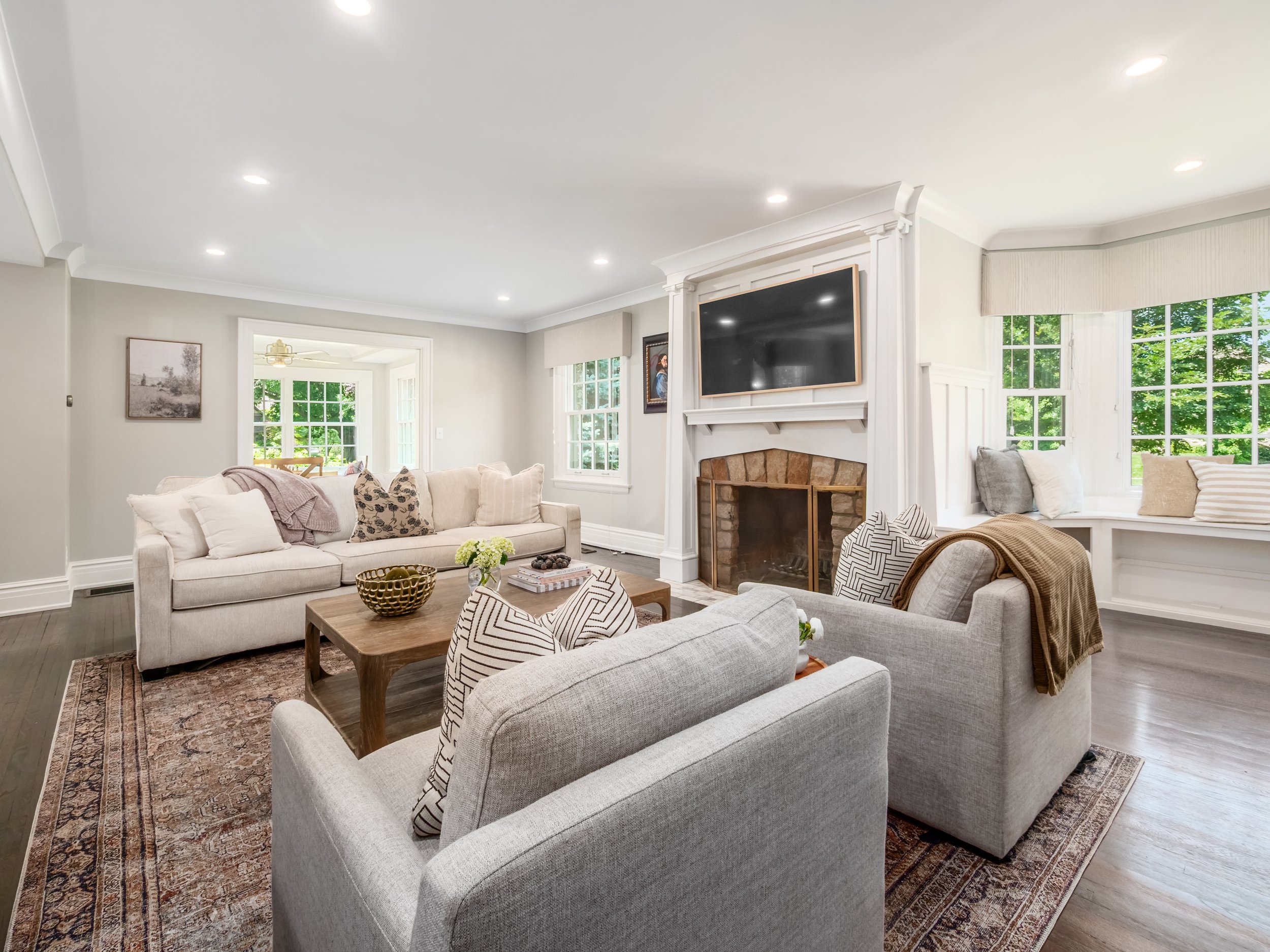
Luxury pricing in Columbus isn't one market. It's several, and they behave differently.
In Upper Arlington, Bexley, and the established suburbs, buyers are weighing school district quality, lot size, renovation condition, and proximity to Clintonville and Grandview amenities. Homes that are move-in ready and well-staged are still generating multiple offers. Homes that need updates are sitting, sometimes significantly longer, because buyers at this price point don't want a project.
In German Village and Short North, the equation shifts toward walkability, architectural character, and proximity to the city's restaurant and arts scene. These buyers tend to be younger professionals or empty nesters, and they're comparing your property against downtown condos and new construction. Price-per-square-foot matters here, but so does the feeling of the neighborhood.
Downtown condos — including properties at Parks Edge, North Bank, and LeVeque Tower — operate under a different set of variables entirely: HOA financials, building management, floor and view hierarchy, and the total cost of ownership including monthly fees. Pricing a downtown unit without accounting for all of those factors is a fast way to get the number wrong.
Across all of these sub-markets, the same principle holds. The first two weeks of a listing are when the right buyers are paying the most attention. Research consistently shows that a well-priced new listing creates urgency and momentum — and that urgency disappears quickly once a listing ages.
How to Get the Number Right

The right list price for a Columbus luxury home in 2026 comes from three inputs, and none of them is what you paid for the house or what your neighbor got in 2022.
Current Comparable Sales
Not last year's comps, not the neighborhood's highest sale ever — the transactions that closed in the last 90 days in your specific price band and neighborhood. This is the data a serious buyer's agent will pull before their client writes a single word on a contract.
Active Competition
What can a qualified buyer purchase right now instead of your home? If there are three similar properties at similar price points in your area, your home needs to compete against those — not against an idealized version of what you hoped the market would pay.
Absorption Rate
How fast are homes at your price point actually selling in your specific neighborhood? In some Columbus micro-markets, well-priced luxury inventory is moving in under three weeks. In others, 45 to 60 days is the norm even for well-prepared properties. Knowing which situation you're in changes the strategy.
What none of this means is pricing your home below its value. The goal of right-pricing is not to "give it away." It's to position the home so that the buyers who are the best fit for it find it quickly, and find each other. A correctly priced luxury home in Columbus — well-staged and well-presented — still has every chance of receiving strong offers, sometimes multiple offers. The difference is that you get there in weeks, not months.
Ready to Know What Your Home Is Actually Worth Right Now?
A pricing conversation costs you nothing and tells you everything. Whether you're thinking about listing in the next 60 days or just want an honest picture of where the Columbus luxury market stands for your property, I'm happy to sit down and walk through the numbers with you.
If you want to understand the private client approach we bring to every listing, start here: our Keller Williams Luxury page — https://thewillcutgroup.com/kwluxury

Frequently Asked Questions About Luxury Home Pricing in Columbus
-
The Columbus luxury market, homes priced above $600,000, operates on different fundamentals than the broader market. Buyers at this level arrive with significant research already done, including comparable sales data and an understanding of competing inventory. They are less likely to be swayed by emotional appeal and more likely to walk away from anything that feels misaligned with current market value. This means precision in pricing matters more at the luxury tier, not less.
-
Well-staged, correctly priced luxury homes in Columbus are selling in 14 to 28 days as of mid-2026. Homes that are overpriced or in need of updates are sitting considerably longer — often 60 days or more — before sellers adjust pricing. The gap between those two outcomes is almost entirely a function of the initial list price.
-
Buyers in the Columbus $600K-plus market are prioritizing move-in-ready condition, walkability, updated amenities, and neighborhood quality. They are comparing your home against every active listing at a similar price point. Homes that require significant updates tend to attract aggressive negotiation or simply fewer showings, because buyers at this level don't want to manage a renovation project on top of a major purchase.
-
Yes, and the data is clear on this. A price reduction signals to buyers that the seller misjudged the market, which invites lower offers and extended negotiation. In Columbus specifically, more than half of all listings in late 2025 experienced a price reduction, which is well above the healthy 30 to 35% baseline. Sellers who correct after the fact are typically working with a different, more cautious buyer than the one who would have acted on a well-priced new listing in week one.
-
Columbus luxury is not one market. Upper Arlington and Bexley favor established lot sizes, school district quality, and move-in-ready condition. German Village and Short North buyers weigh walkability and architectural character. Downtown condo buyers factor in HOA financials, building management quality, and total monthly cost of ownership. Pricing correctly means understanding which micro-market you're in, not just the city-wide trend.
-
The clearest signal is showing activity in the first two weeks. A well-priced luxury home generates serious inquiries quickly. If week two passes with low traffic and no offers, the market is telling you something. A comparative market analysis from an agent who works specifically in the Columbus luxury segment — not a general market estimate from an automated tool — is the most reliable starting point before you list.